
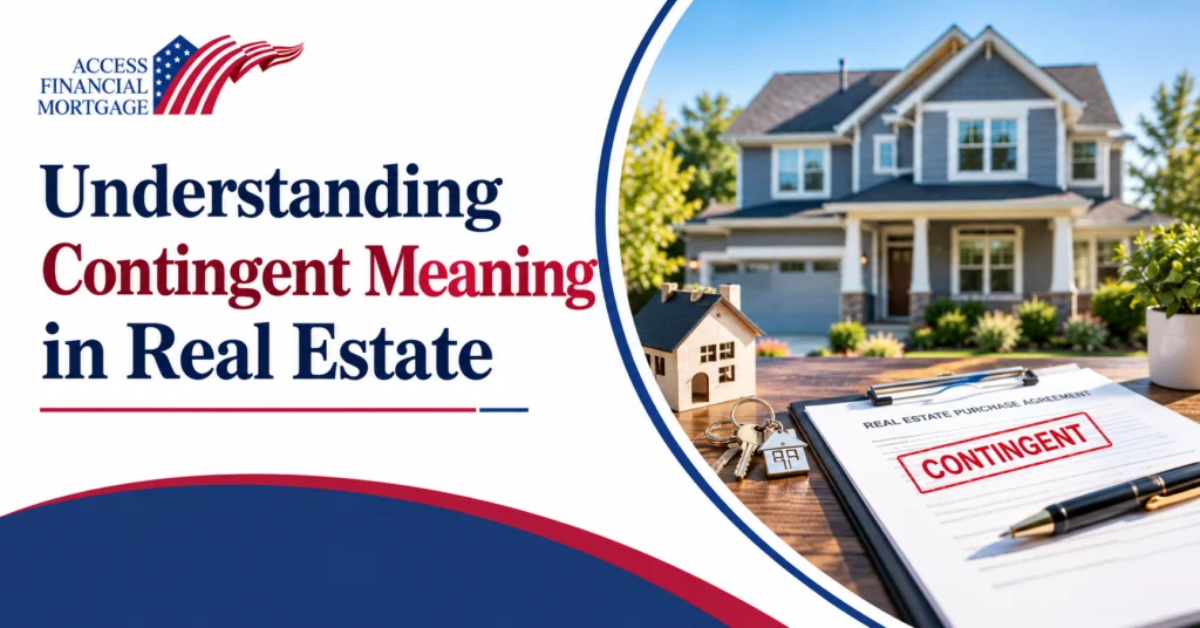
A home marked contingent isn’t off the board, but it’s not fully available either. The shortest version is this: the seller has accepted a contingent offer, and the sale depends on certain real estate contingencies being satisfied before closing.
If you’re trying to decode real estate terms during a search, understanding Contingent Meaning in Real Estate can save you from wasted time, false hope, and bad assumptions.
What Does Contingent Mean Real Estate Buyers Should Know?
Contingent means a seller has accepted an offer, but the contract still depends on one or more conditions. In plain language, the deal has hurdles left. The buyer may need financing approval, a clean inspection, a satisfactory appraisal, or the successful sale of their current home.
That’s the real estate meaning that matters most. When people ask, “What does contingent mean on a house for sale?” they’re usually asking whether they can still buy it. My view is simple: don’t treat a contingent listing as available, but don’t treat it as impossible either. It sits in the gray zone, and that gray zone can matter if the first deal falls apart.
The Meaning Of Contingent In Real Estate
The meaning of contingent in real estate comes down to protection. A contingent contract gives one or both sides a way to move forward while still allowing the buyer, and sometimes the seller, to address specific issues before the sale becomes final.
For buyers, contingencies reduce risk. Nobody wants to be locked into a home with major hidden repairs, a low appraisal, or a loan that falls through. For sellers, a contingent offer can still be attractive if the buyer is strong, the terms are fair, and the timeline is clear.
I’ve seen buyers get too discouraged when they see “contingent” online. I’ve also seen buyers get too aggressive, thinking the home is still wide open. Neither reaction is smart. The better move is to ask what type of contingency is in place and whether the seller is accepting backup offers.
Common Real Estate Contingencies That Shape The Deal
Real estate contingencies are not small details. They determine what must happen before the sale can close and what happens if something goes wrong. The exact wording belongs in the contract, and buyers should review it with their agent or attorney when appropriate.
Common contingencies include:
- Inspection contingency: The buyer can inspect the home and may request repairs, credits, or cancellation if serious problems appear.
- Financing contingency: The buyer needs mortgage approval. If financing fails under the contract terms, the buyer may have a way out.
- Appraisal contingency: The home must appraise at or near the purchase price, especially when a lender is involved.
- Home sale contingency: The buyer’s purchase depends on selling their current home.
- Title contingency: The buyer expects clear ownership transfer without unresolved title problems.
- Insurance or HOA review contingency: In some transactions, buyers need time to confirm acceptable insurance, community rules, or association documents.
A contingency isn’t automatically bad. In fact, I think a clean, well-written contingency is healthier than a vague promise. The problem starts when timelines are loose, documents are unclear, or the parties assume everyone understands the same thing.
Contingent Meaning House Shoppers Often Miss
The phrase “contingent meaning house” sounds awkward, but it reflects a real search habit. People see a house online, notice a status label, and need to know what that label means right now.
Here’s the practical reading:
- The seller has accepted an offer.
- The deal has not closed.
- Certain conditions still need to be met.
- The home may still appear online.
- Backup offers may or may not be welcome.
- The listing status can change quickly.
The important part is not the label alone. It’s the reason behind the label. A financing contingency tells a different story than a home sale contingency. An inspection contingency close to expiring feels different from a buyer who still has to sell another property.
Contingent Vs. Pending Means Different Levels Of Certainty
Contingent vs. pending is one of the most useful distinctions for buyers to understand. A contingent home usually has active conditions that still need to be satisfied. A pending home is usually further along, with major contingencies removed or deadlines passed, although local listing rules can vary.
That’s the core difference between pending and contingent. Pending vs. contingent isn’t just wordplay. It signals how far the contract has moved toward closing.
A contingent property may still have meaningful uncertainty. A pending property often has less uncertainty, though it still isn’t sold until closing happens. Deals can fail at either stage, but the odds and reasons are different.
If I were advising a buyer, I’d say this: spend more energy on active listings, keep an eye on contingent homes you truly love, and don’t build your whole search around pending homes unless your agent sees a real opening.
What Does It Mean When A Home Is Contingent On Your Next Move?
When a home is contingent, your next move depends on your market, your timeline, and your tolerance for waiting. You may be able to ask your agent to contact the listing agent, learn the contingency type, and see whether a backup offer would be considered.
A smart buyer should avoid guessing. Ask direct questions before getting emotionally attached:
- What contingency is still open?
- When does that contingency expire?
- Is the seller accepting backup offers?
- Has the buyer completed inspections?
- Is there any concern about financing or appraisal?
- Does the listing have a kick-out clause if a home sale contingency is involved?
A backup offer can be useful, but only if you’re comfortable with the wait. I don’t like seeing buyers freeze their search for a long-shot backup position. Keep looking unless the home is truly worth the patience.
How A Contingent Offer Affects Buyers And Sellers
A contingent offer can be a practical bridge between interest and commitment. For the buyer, it creates breathing room to verify the home, the financing, and the numbers. For the seller, it can secure a serious buyer while keeping the transaction moving.
Still, every contingency carries a trade-off. Buyers with too many contingencies may look weaker in a competitive market. Sellers who accept a heavily contingent contract may lose time if the buyer can’t perform.
A strong contingent offer usually has:
- Clear deadlines.
- Proof that the buyer is financially prepared.
- Reasonable inspection terms.
- A realistic closing timeline.
- Specific language about what happens if a contingency is not met.
- Communication between agents that doesn’t rely on vague optimism.
The best contracts reduce surprises. That’s why buyers shouldn’t copy terms from another deal or assume online definitions replace professional guidance.
Mistakes To Avoid When You See Contingent In Real Estate
The biggest mistake is assuming the home is either definitely gone or definitely available. Contingent in real estate means the answer is conditional. You need more context before making a decision.
Other mistakes include:
- Falling in love with the property before learning the contingency details.
- Ignoring active homes because you’re waiting on one contingent listing.
- Making a backup offer without understanding your obligations.
- Assuming “pending” and “contingent” mean the same thing everywhere.
- Forgetting that listing status language can vary by market and MLS practice.
I’d rather see a buyer stay curious than get dramatic. Ask questions, read the status correctly, and keep moving.
Access Financial Mortgage Corp. and Financing Clarity
Access Financial Mortgage Corp. works with customers by focusing on their financing needs instead of treating every buyer like the same file. That matters in a contingent real estate situation because financing questions can affect deadlines, seller confidence, and the strength of an offer.
The company can help customers review loan options through a range of lenders, which may give borrowers more than one path to consider. Depending on eligibility and the property, loan program discussions may include conventional loans, FHA loans, VA loans, USDA loans, jumbo loans, and refinancing options.
For buyers dealing with a contingent contract, that kind of loan guidance can help them understand what they can reasonably promise before they sign.
Final Thoughts
The contingent meaning in real estate is straightforward once you strip away the jargon: the home has an accepted offer, but the deal still has conditions. For buyers, that means opportunity may still exist, but it’s not a clean opening. For sellers, contingencies can help keep a deal moving, but only when the terms are clear and the buyer can perform.
My practical advice is to treat every contingent listing as a maybe, not a yes or no. Ask what’s still unresolved, keep your search active, and don’t confuse hope with strategy.
Frequently asked questions
What does contingent mean on a house?
Contingent means the seller accepted an offer, but the sale depends on specific conditions being met. The home is under contract, yet it has not closed.
Can you make an offer on a contingent house?
You may be able to make a backup offer on a contingent house if the seller is willing to consider one. Your agent can ask the listing agent whether backup offers are being accepted.
Is contingent the same as pending?
No. Contingent usually means important conditions remain open, while pending usually means the deal is further along. The exact status rules can vary by local listing system.
Does contingent mean the sale will fall through?
No. Contingent does not mean the sale will fail. It only means the transaction still depends on certain contract terms being satisfied.
What is the most common contingent contract issue?
Inspection, financing, appraisal, and home sale issues are among the most common. Financing and appraisal problems can be especially important when the buyer needs a mortgage.