
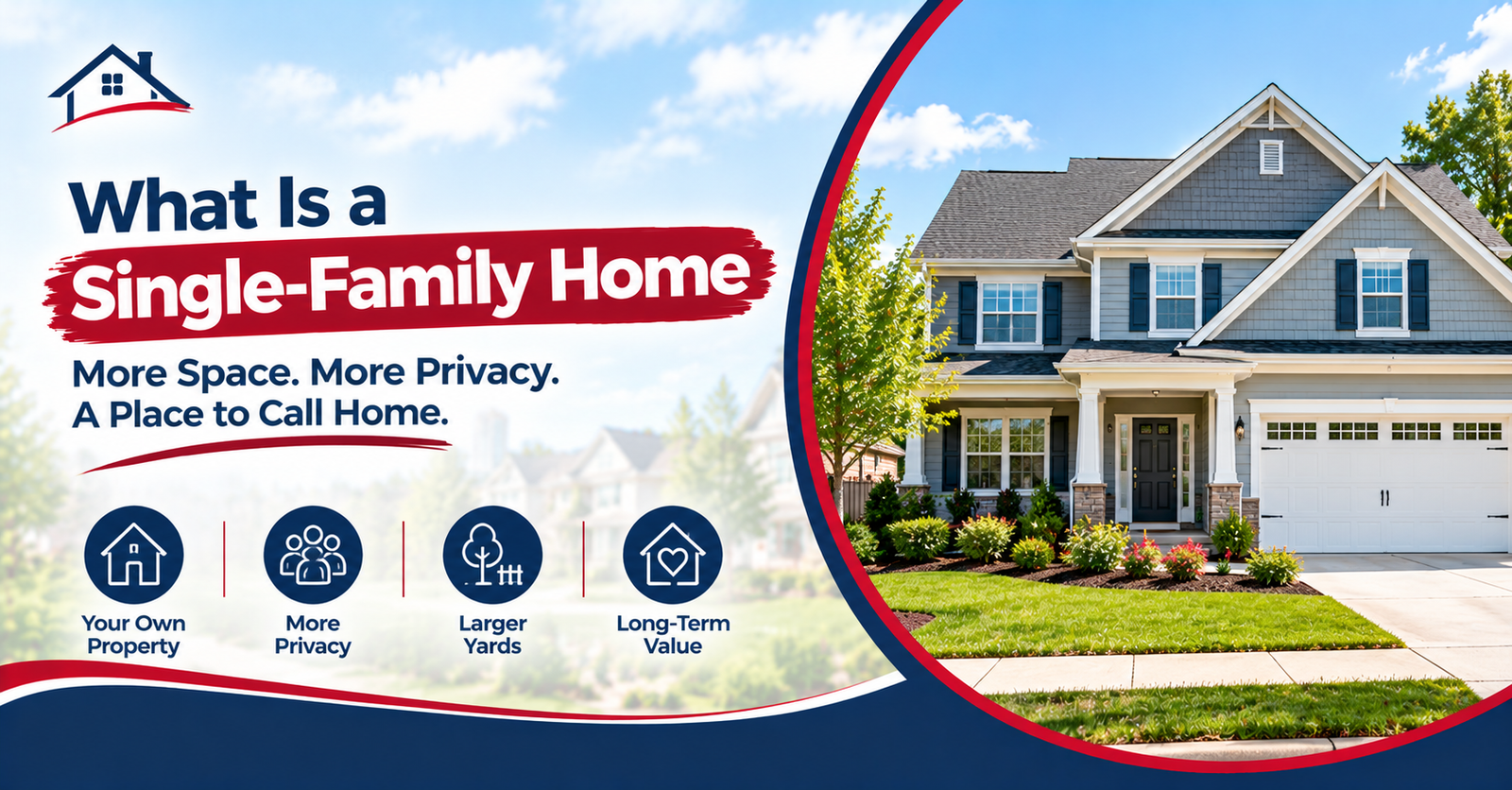
Have you ever read a listing and felt lost? Words like detached and single-family get tossed around. So what is a single-family home? It is a house built for one household. It has its own door, utilities, and land. No wall joins it to a neighbor. If you are asking what a single-family home means, that is the short answer, and it is the single-family home definition most lenders use.
Sounds easy, right? But townhouses and condos cause mix-ups. So do homes with a backyard cottage. Get it wrong, and your loan gets harder. Let’s sort it out. Access Financial helps buyers every week with exactly this question.
What Is a Single-Family Home in Simple Words?
The meaning stays simple. One house holds one household. If you ask what a single-family household is, it means one family or group living together as one unit in one home. You may also see it written as a single-family dwelling, a single-family residence, or a single-family house, and all of these mean the same thing. Experts check five things before they use the label. Each one matters for your loan. Miss one and the label might change. Here they are.
- One Home Unit: A single-family dwelling has one living space. It has one kitchen for one household. No hidden units sit inside. Separate meters for each unit would break the rule.
- Own Door and Utilities: A single-family residence detached from other homes has its own front door. It also has its own water line and heating system. It never shares an HVAC with a neighbor.
- Land Ownership: With a detached single-family home, you own the home and the land on which it sits. A single-family residential property includes the yard and driveway too. A fence line marks where your land ends.
- No Shared Areas: A condo has a shared lobby and hallway. A single-family home usually has none. Fewer shared spaces means fewer shared bills.
- Census Label: The Census Bureau sorts homes by type. A single-family detached home sits alone on its lot. Some count as semi-attached when walls touch.
People also ask what a single household is, and who gets to live in a single-family home. In general, one household of related or unrelated people living together as a unit can live there, though local rules may set limits.
Types of Homes Counted as Single Family
Not every home fits the label the same way. Single-family housing splits into a few kinds, and a few surprises sit inside it. Some homes share a wall and still pass. Others have a small second home on the lot. Here is how each one works, and how single-family home types compare.
Detached Homes
Most single-family units in the country are detached. They stand alone with open space on every side. Ramblers and bungalows fall here. A detached family home is what most buyers picture first. Many buyers pick this type for the yard alone. You also get a driveway and often a garage.
Townhouses
Some townhouses count too. A wall must run from ground to roof. The two units must not share heating, cooling, or utilities. So is a townhouse considered a single-family home? Sometimes. Some townhouses are legally condos instead. Ask the seller how the land is owned. Owning the land changes your loan options. Our guide to townhouse vs. single-family goes deeper on the differences. Likewise, is a condo considered a single-family residence? Usually not, because condo owners share walls and common areas.
Homes With an ADU
An ADU is a basement apartment, garage unit, or cottage. Your home often stays single-family. It needs the same address and shared utilities. The ADU counts as extra space, not a new home. Some owners rent it out for extra income. Local rules decide if you can build one. Check your city code first.
Pros and Cons of Owning One
Space and privacy come at a price. Weigh both sides before you shop. We say buy one if you plan to stay long. Short stays favor a condo or a rental.
- More Space: A single-family house offers more bedrooms and storage. A condo rarely matches it. Basements add room to grow. Garages give your tools a home.
- Quiet and Privacy: No shared walls, floors, or ceilings. Noise from neighbors drops. A fence does the rest. You hear your own life, not theirs.
- Freedom to Change: You choose paint, additions, and yard plans. Big work still needs local permits. Many homes have no HOA at all. Nobody votes on your front door color.
- Higher Price: Detached homes cost more than condos or townhouses nearby. First-time buyers feel this most. A home affordability calculator helps set a budget. Run your numbers early.
- Full Upkeep: The roof, the heater, the water heater, and the lawn are all yours. A single-family residence owner pays for every repair. Set money aside each month. Old roofs do not wait for a good time.
Rules, Costs, and Loans to Expect
Your lot sits under local rules. Your wallet sits under loan rules. Both change what you pay and what you build. Learn them before you make an offer. Surprises here cost buyers money. We keep it short.
Zoning and HOA Rules
Single-family zoning sets lot sizes, setbacks, and allowed additions. A single-family home zoning change can also affect what you build later. In places like Richmond, zoning for multifamily housing differs from zoning for single-family lots, so check the local map first. Some cities now allow duplexes on old single-family lots. Zoning also limits unrelated adults sharing one home.
Fair Housing rules say cities must apply limits evenly, and HUD explains those rules in plain language. A single-family development often sits under an association. An HOA sets paint, fence, and yard rules. It also charges monthly or yearly dues. Read our guide on what HOA fees cover and ask for the rules before you buy.
Down Payments by Loan Type
Conventional loans start at 3% down on some products, and you can review our conventional loans for current options. FHA loans need 3.5% down with qualifying credit. Eligible VA borrowers often put down nothing. Jumbo loans cover prices above conforming limits. Under 20% down on a conventional loan means mortgage insurance. A bigger down payment lowers your monthly bill. Lenders check your credit, income, and savings. Preapproval shows sellers you are a serious buyer. Expect tax returns, W2 forms, pay stubs, and ID.
Closing Costs to Plan For
Closing costs run 3% to 6% of the price. They cover the appraisal, title insurance, escrow, and lender fees. A higher price means bigger fees. Budget for them early, and read our guide on closing costs and how much you will pay. Your cash to close is more than the down payment. Aim high when you guess. A low guess hurts more than a high one. For a neutral overview of costs, the CFPB offers a free home buying guide.
Other Home Types Worth a Look
A single-family home does not fit every budget. A condo costs less and needs less upkeep. Dues cover the roof and shared costs. A townhouse sits in the middle with shared walls. This is the difference between a single-family home and a multi-family home in practice: a multi-family building holds two or more units, so you can rent the others. A duplex or fourplex lets you collect rent from the other units. Modular homes often qualify for the same loans. Manufactured homes follow a separate federal code and loan rules. We help buyers weigh each choice.
Access Financial Mortgage Corp. Can Help You Finance a Single-Family Home
Access Financial Mortgage Corp. treats you as a person. You are not a number. We do not push you into a bank formula. We use common sense instead. We work with more than 100 investors. This gives you more rate choices. Our lenders include A-rated banks and private hardship lenders. You can choose from 30-, 20-, 15-, 5-, and 10-year loans. We also offer ARMs, Conventional, Jumbo, and VA loans. Home Equity Lines and Commercial loans are covered too. Need full documents or no documents? We fit your situation. Buying as an investor or in a multifamily building? We handle that too. Our goal is simple. We find the best loan for your home. Visit accessfmc when you want to talk.
Conclusion
A single-family home gives you room, privacy, and control. It also hands you the roof, lawn, and repair bills. Weigh both before you sign. Check the zoning and any HOA rules first. Run the closing cost math early. Many buyers feel pressure to buy the biggest house. Resist it. A smaller home with a calm budget wins. A townhouse or condo might fit better. Buy the one you afford with ease. No shame in it. Questions about loans? Talk to our team at Access Financial. We will go through your numbers with you.
Frequently Asked Questions
What Is a Single Family Home?
A single-family home is a house for one household. It has its own entrance, utilities, and land. No wall joins it to another home. It sits on its own lot. This is also the definition of a single-family home most lenders and census forms use.
Is a Townhouse a Single-Family Home?
Sometimes. A townhouse counts if a wall runs from ground to roof. It must also have its own entrance and utilities. Some townhouses are legally condos, so ask.
What Is the Difference Between Single-Family and Multifamily Homes?
A single-family home holds one household. A multifamily building holds two or more units. Each unit has its own entrance and utilities. An ADU does not change the label.
Do HOAs Apply to Single-Family Houses?
Yes, if the home sits in a covenant community. An HOA sets exterior rules and charges dues. Read the covenants, conditions, and restrictions before you buy.
How Much Down Payment Does a House Need?
It depends on the loan. Conventional loans start at 3% on some products. FHA needs 3.5% with qualifying credit. Eligible VA borrowers often pay nothing down.
What Does Single Family Mean?
What does single-family mean in real estate? It means the building holds one dwelling unit for one household. If someone says it is a single-family home, they mean no other unit shares the structure.
What Is Considered a Single-Family Home?
What is considered a single-family home includes detached houses, many townhouses that have their own land and utilities, and homes with a small ADU. Condos and buildings with several units are usually treated differently.