
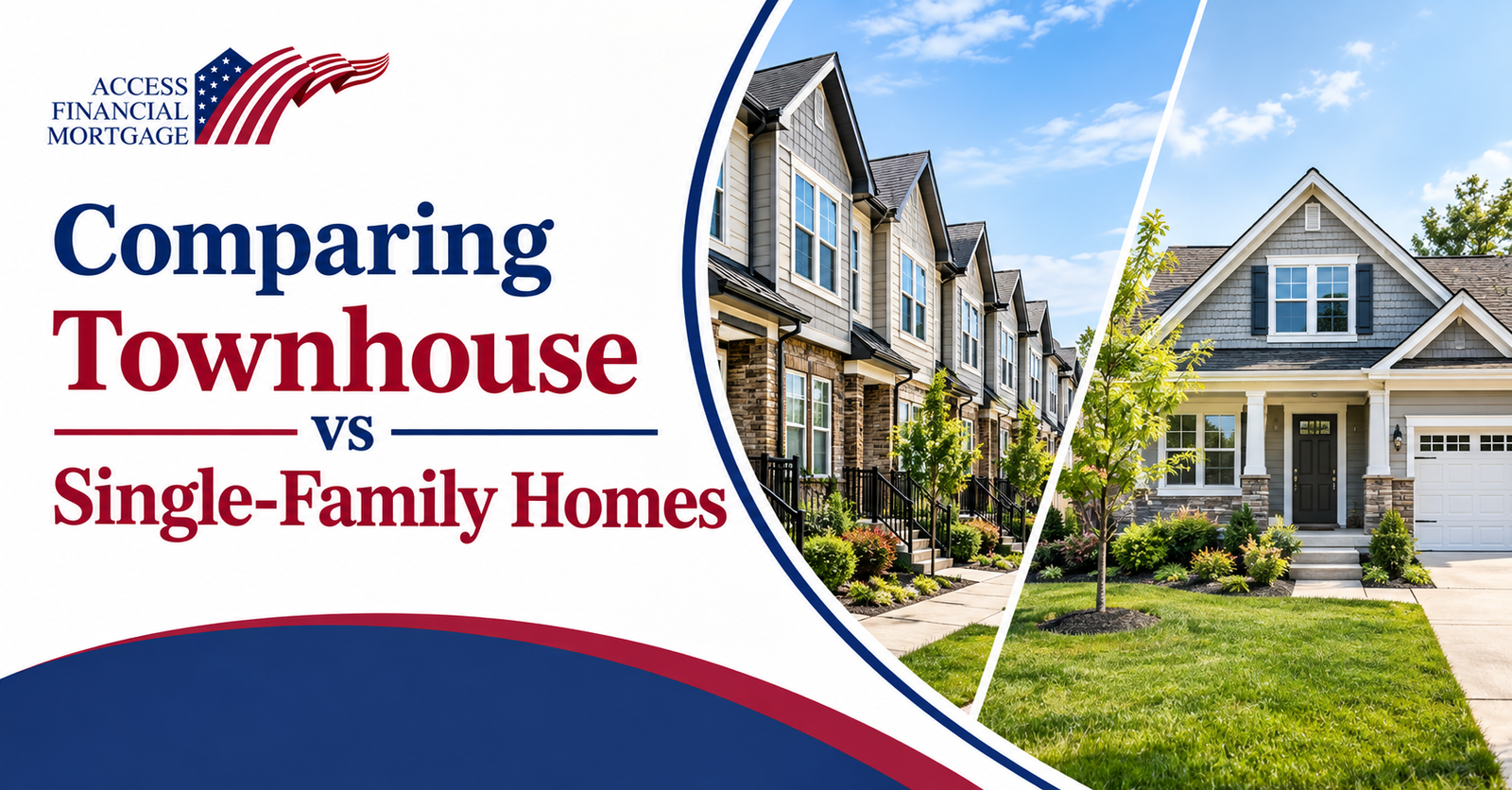
If you’re comparing a townhouse vs. a single-family home, my take is simple: buy the single-family home if you can comfortably afford it and plan to stay long enough to benefit from the extra control, land, and resale appeal.
A townhouse can still be a smart buy, especially in expensive markets or for buyers who want less exterior upkeep, but you need to read the HOA rules and monthly costs like your budget depends on it, because it does.
Which is better, a townhouse vs single-family home?
For most buyers, a single-family home is the better long-term choice because you usually get more privacy, more control, and broader buyer demand when it’s time to sell. That said, buying a townhouse vs single family home can make sense when the townhouse gets you into a better location, lowers your maintenance load, or keeps your payment from becoming a problem.
The mistake is treating “townhouse vs. house” as a pure price comparison. A lower purchase price can be wiped out by HOA dues, special assessments, higher rules friction, or slower resale. A single-family house vs. townhouse decision should start with lifestyle, then move to total monthly cost, then finish with resale risk.
The basic ownership difference matters more than buyers think
A single-family home is usually a detached property on its own lot. You own the structure and the land, and you’re responsible for nearly everything: roof, yard, exterior, driveway, insurance, repairs, and local code issues. That responsibility is annoying, but it also gives you freedom.
A townhouse is typically attached to neighboring homes by one or more walls. You may own the land beneath the unit, or you may have ownership that works more like a condo setup, depending on local documents. This is why the phrase detached townhouse vs. single-family house can be confusing. A detached townhouse may look like a small house, but if it’s governed by townhouse-style association rules, shared maintenance obligations, or common-area ownership, it won’t feel the same as a traditional single-family home.
That distinction affects financing, insurance, maintenance, renovations, rentals, and resale. Before you fall for finishes or a short commute, ask what you truly own and what the association controls.
The real townhouse vs. single-family home pros and cons
Here’s the blunt version: townhouses are convenient, but single-family homes give you more independence. Neither is automatically “bad,” but the trade-offs aren’t equal.
Townhouse advantages:
- Lower entry prices in many neighborhoods can help first-time buyers stop renting sooner.
- Less exterior maintenance if the HOA handles landscaping, roofs, siding, snow removal, or shared spaces.
- Better location options, since townhomes are often built near city centers, transit, shops, and job hubs.
- Amenities such as pools, gyms, gates, playgrounds, or shared green space, depending on the community.
- Lower utility use in some attached layouts because shared walls can reduce exposure to outdoor temperatures.
Townhouse disadvantages:
- Shared walls, which can mean noise, odor, vibration, and less privacy.
- HOA dues can rise and affect loan qualification.
- Rules about pets, rentals, parking, exterior changes, landscaping, and sometimes even paint colors.
- Special assessments if reserves are weak or major repairs are needed.
- A smaller resale pool, since many buyers filter out attached homes immediately.
Single-family home advantages:
- More privacy, yard space, parking flexibility, and separation from neighbors.
- More control over renovations, additions, landscaping, and exterior use, subject to local rules.
- Stronger emotional appeal for buyers who want space, independence, and a traditional home setup.
- No shared-wall concerns, unless the property is unusually close to neighboring homes.
- Better fit for families, pets, hobbies, work trucks, gardens, and long-term customization.
Single-family home disadvantages:
- Higher purchase price in many areas.
- More maintenance, and it’s all on you.
- Larger repair surprises, including roof, plumbing, exterior, drainage, and landscaping costs.
- Potentially higher insurance, utility, and upkeep costs.
- More weekend chores unless you pay someone else to handle them.
The monthly cost is where the townhouse discount can disappear
Don’t compare listing prices. Compare the full monthly payment. A townhouse listed below nearby single-family homes may still cost more per month once you include HOA dues, insurance requirements, parking fees, reserves, and possible assessments.
Run the numbers this way:
- Start with principal and interest.
- Add property taxes.
- Add HOA dues and ask how often they’ve increased.
- Add insurance based on the actual ownership structure.
- Add utilities, parking, trash, water, landscaping, and maintenance reserves.
- Add a cushion for repairs the HOA doesn’t cover.
If the townhouse payment is only slightly lower than the single-family payment, I’d lean toward the single-family home. If the townhouse keeps your payment clearly safer and puts you in a stronger neighborhood, it deserves serious consideration.
Home insurance townhouse vs. single-family details can get tricky
Home insurance for a townhouse vs. single-family coverage depends on the legal structure, not just the shape of the building. A detached single-family home usually needs a homeowners policy that covers the dwelling, personal property, liability, and other standard protections.
A townhouse may need a similar policy if you own the full structure, including the roof and exterior. In some communities, the HOA master policy covers certain exterior elements, while you insure the interior and personal property. That’s closer to the way condo coverage works, but you shouldn’t guess.
Before you buy, ask for the master insurance policy, association documents, and a written explanation from your insurance agent. You want to know who pays if there’s roof damage, a shared wall fire, water intrusion, exterior storm damage, or injury in a common area. This is one of those boring details that becomes very exciting when a claim gets denied.
Appreciation and resale value favor houses, with exceptions
Townhouse vs. single-family home appreciation usually favors the single-family home because land, privacy, and flexibility tend to attract more buyers. The resale value of a townhouse vs. a single-family property can vary by city, school district, commute pattern, supply, and HOA quality, but I’d still rather own the detached home if both options fit the budget.
Townhouses can appreciate well when they’re in walkable, supply-constrained areas or when detached homes are far out of reach. But resale value can get squeezed if a builder keeps adding similar new townhomes nearby. Why would a buyer choose your 8-year-old unit if a brand-new one down the street has builder incentives, cleaner finishes, and similar dues?
Single-family homes also face competition, but they’re easier to differentiate. A larger lot, better yard, finished basement, added bedroom, updated kitchen, or better outdoor space can widen the buyer pool.
Investment buyers should be pickier with townhouses
Townhouse vs. single-family home investment decisions come down to rent demand, HOA rules, cash flow, repairs, and exit strategy. I’d be cautious with townhouses as rentals unless the numbers are strong and the association rules are friendly.
Check these items before treating a townhouse like an investment:
- Rental caps, minimum lease terms, and approval requirements.
- HOA reserves and meeting minutes.
- Special assessment history.
- Rules for short-term rentals, roommates, pets, and parking.
- Comparable rents for townhouses, condos, and single-family homes nearby.
- Competing new construction.
- Whether investors are already concentrated in the community.
Single-family rentals often offer more control and a wider future resale audience. Townhouses may offer lower maintenance and lower entry costs, but the HOA can limit what you do with the property.
Condo vs townhouse vs single-family home is not the same decision
A condo usually gives you ownership of the interior unit, with shared ownership or association control over common areas and building systems. A townhouse often feels more like a house because it has its own entrance, multiple levels, and sometimes a small yard or garage. A single-family home gives the most separation and control.
If you’re comparing condo vs. townhouse vs. single-family home options, rank them this way for control: single-family first, townhouse second, condo third. For convenience, that order may be reversed. For budget, condos and townhouses often look easier at first, but HOA dues and rules deserve close review.
This is also where townhouse vs. single-family home Reddit threads can be useful, not because strangers should make your decision, but because real owners complain about things listing photos hide. Look for repeated comments about noise, parking, HOA boards, dues, rental limits, and resale delays.
A practical checklist before you choose
Use this checklist before writing an offer:
- Can you afford the single-family home without draining your savings?
- Are HOA dues stable, and does the association have healthy reserves?
- Do you need a yard, garage space, privacy, or room to expand?
- Would shared walls bother you after the excitement wears off?
- Are there rental restrictions that could hurt future flexibility?
- Is new townhouse construction nearby likely to compete with your resale?
- Does the monthly payment still work if dues, taxes, or insurance rise?
- Are you buying for lifestyle first, or are you relying on appreciation?
My rule: if the single-family home vs. townhouse payment difference is manageable, choose the single-family home. If choosing the house makes you house poor, choose the townhouse and protect your cash flow.
How Access Financial Mortgage helps buyers compare options
Before you decide between single-family vs townhouse financing, it helps to work with a mortgage team that doesn’t shove every borrower into the same formula. Access Financial Mortgage treats each customer as an individual and uses common sense instead of relying only on standard loan profile formulas.
They represent a wide range of lenders, from “A” rated lenders to private hardship lenders. They also work with more than 100 investors to help find strong rates across many loan programs, including full-document, no-document, investor, and multi-family loans. That range matters when you’re comparing townhouse vs. single-family options, because the best loan fit can change based on property type, income documentation, investment goals, and overall financial profile.
Conclusion
When comparing Townhouse vs. Single Family, I’d choose the single-family home whenever the payment is comfortable and the location works. It gives you more control, usually attracts more future buyers, and avoids many shared-wall and HOA headaches.
But don’t stretch just to win the single-family house vs. townhouse debate. A well-located townhouse with manageable dues is better than a detached home that leaves you broke, stressed, and one repair away from trouble. The smart move is the property you can afford, understand, maintain, and resell without regret.
Frequently asked questions
Is a townhouse cheaper than a single-family home?
A townhouse often has a lower purchase price, but HOA dues, assessments, insurance, and parking costs can reduce or erase the savings. Always compare the full monthly cost, not just the listing price.
Do townhouses appreciate less than single-family homes?
In many markets, single-family homes have stronger resale demand because they offer land, privacy, and more control. Townhouses can still appreciate well in high-demand locations with limited housing supply.
Is townhouse insurance different from single-family home insurance?
Yes. A single-family home usually needs coverage for the full structure, while townhouse coverage depends on what the owner controls and what the HOA master policy covers.
Is a townhouse a good first home?
Yes, a townhouse can be a good first home if it keeps your payment affordable, has reasonable HOA rules, and fits your lifestyle. It’s less appealing if dues are high or resale competition is heavy.
Which has better resale value, a townhouse or a single-family home?
A single-family home usually has better resale value because more buyers want privacy, land, and flexibility. A townhouse can resell well if it’s in a desirable area and the HOA is well managed.