
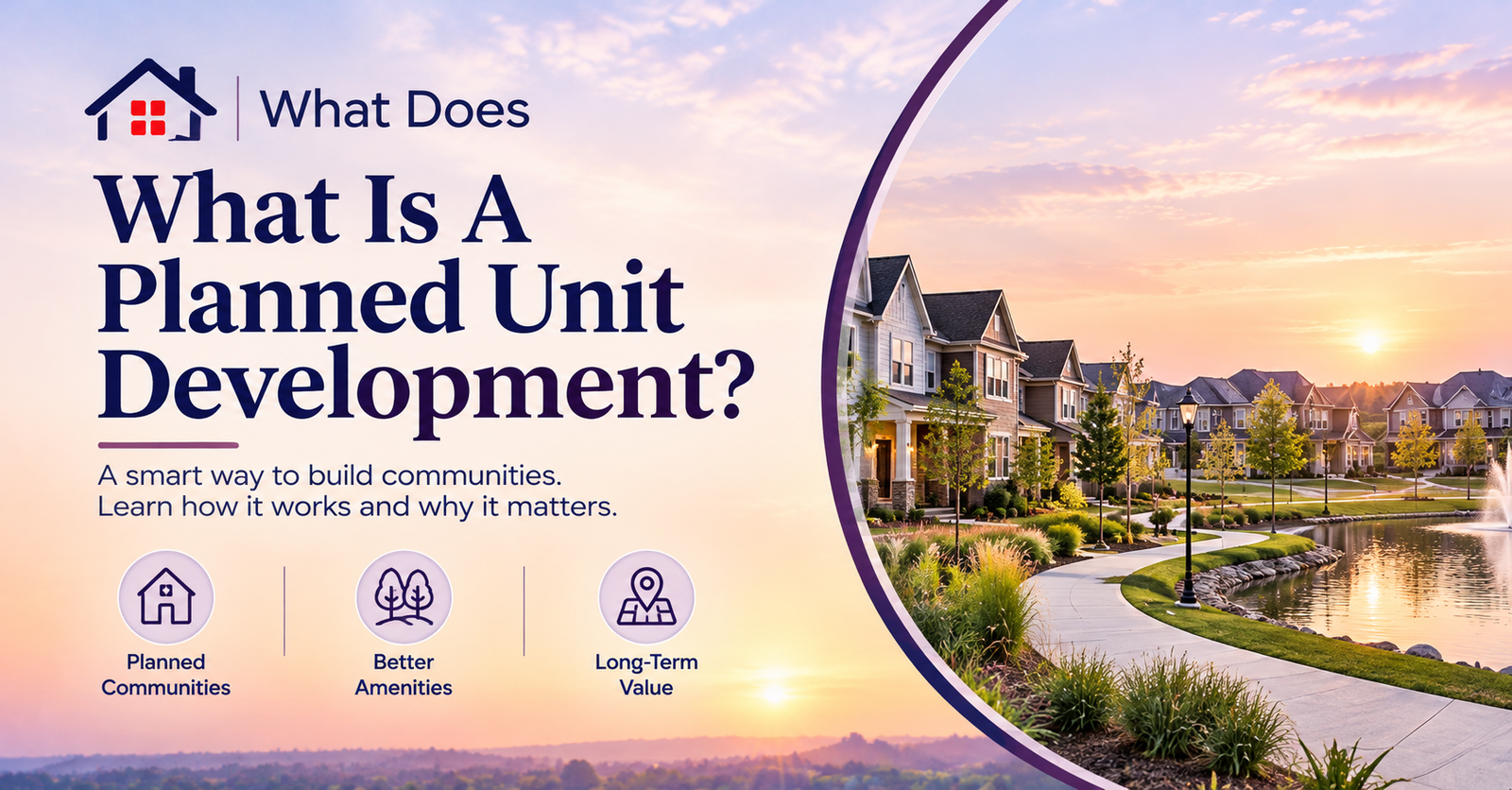
Have you been asking yourself, “What is a planned unit development?” A planned unit development, or PUD, is a planned community. It can include homes, shared spaces, and rules. It may also include shops or offices.
In real estate, a PUD can shape daily life. It can also shape your mortgage papers. This guide explains the meaning of PUD in real estate in plain words. If you are comparing property types, our guide on what a condo is is a helpful next read.
What Is A Planned Unit Development?
A planned unit development is land planned as one whole community. It may have homes, streets, parks, pools, or shops. The planned unit development definition is simple. It is a property inside a planned project. You will also see planned unit developments (plural) used for whole groups of these communities.
So, what is a PUD in real estate? It is a home with private ownership. It also has shared areas. Owners may help pay for those areas.
People ask many forms of this question. They ask, “What’s a PUD?” They also ask what a PUD is, what a PUD is, or what planned unit development is. The answer is the same. A PUD is a planned place to live. If you want to define PUD or planned unit development in one line, it is a planned community with private homes and shared areas.
Here is a simple way to understand PUD real estate:
- Planned unit development real estate means planned homes and shared spaces.
- A PUD community means owners share some common areas.
- PUD property type may appear on loan papers.
- PUD home means a home inside a PUD.
- What does P.U.D. stand for means planned unit development.
This is why buyers ask what a planned unit development in real estate is. A PUD may have dues. It may also have rules. Our guide on HOA fees and what they cover explains how those dues usually work.
What Does PUD Stand For In Real Estate?
PUD stands for planned unit development. The term is often used by lenders, agents, and appraisers. When someone asks what PUD stands for, this is the answer. You may also see people type p u d with spaces, and it points to the same term.
What does PUD stand for in real estate? It means the same thing. It describes a planned project. The project can include homes and shared land.
A PUD may look like a normal neighborhood. It may also feel like a condo group. Yet a PUD unit is often owned like a house.
A buyer may own the home and lot. The group may own shared land. This can include roads, parks, gates, or pools.
Common PUD signs include:
- What is PUD in real estate: homes in a planned area.
- PUD housing: another way to name the setup.
- PUD home meaning: a home with shared rules.
- What is a PUD property: a property in a PUD.
- PUD in real estate: planned homes with shared parts.
This matters for the loan. A lender may review the project. They may also check dues and rules.
How PUD Homes And Communities Work
A PUD development is built with a plan. The plan covers land use, roads, homes, and open space. This is part of land use planning.
The goal is often better community design. Homes may sit near parks. Shops may sit near homes. Some projects support walkable streets.
A mixed-use development can be part of a PUD. That means homes and business space sit together. This can support easier daily living. You may hear this called a PUD housing development when the project is mostly homes.
Some PUDs support sustainable communities. They may protect open space. They may place homes near shared paths.
A PUD can also help with urban development. Cities may use this setup for flexible growth. The plan can mix housing, services, and green space.
Buyers should check these basic items:
- Ask what areas are shared.
- Check monthly or yearly dues.
- Ask what services dues cover.
- Review any limits on changes. Our guide on deed-restricted communities explains how recorded rules can limit what you do with your property.
These steps help answer what a PUD development is. They also show how costs may work.
Why Lenders Care About PUD Details
Lenders care because a PUD can affect risk. A PUD mortgage file may need extra review. The lender may check the project and ownership type. PUD eligibility and PUD requirements can vary by loan program, so ask early.
You may see a planned unit development rider. This is a loan document. It adds terms about the PUD. Many buyers ask what a planned unit development rider is or what a PUD rider is, and the answer is that it is an add-on to your mortgage that covers shared areas and dues. You may also see it called a PUD rider on closing papers.
The rider may mention shared areas. It may also mention dues and rules. Read it before closing. If you are asking what a planned unit development rider on a mortgage is, it is that same document attached to your loan.
This does not mean the home is bad. It means the lender needs facts. A PUD is common in many markets. Government-backed options like FHA loans can also apply, and FHA PUD rules depend on whether the project is approved.
Helpful terms to know include:
- PUD in mortgage: PUD details in loan review.
- Planned unit development rider: loan paper for PUD terms.
- Definition of a PUD in real estate: planned homes with shared areas.
- Property type PUD: a label used in files.
When buyers ask what a planned unit development is, lenders hear another question. They hear, “What costs follow this home?” The HUD home buying page is a useful general reference for program basics.
Is This Property A Planned Unit Development?
Ask your agent, lender, or contact. You can also check title papers. The listing may not always make it clear.
The phrase “is this property a planned unit development” is worth asking early. It can save time later. It can also prevent loan delays.
Look for shared roads, gates, parks, or pools. Ask if there are required dues. Ask if owners must follow special rules.
You may also check these documents:
- CC&Rs for rules and limits.
- Plat map for shared land.
- Insurance papers for common areas.
- Loan estimate for mortgage clues. The CFPB’s Loan Estimate guide shows how to read one.
If papers say planned unit development real estate, ask follow-up questions. A PUD can be simple. Still, you should know the rules.
Benefits And Tradeoffs Of Buying In A PUD
A PUD can offer real benefits. Many buyers like shared parks. Some like pools, paths, or gates.
A planned community can also feel tidy. Rules may protect the look of homes. This can help owners feel more settled.
Here is a quick view:
- Benefits: shared spaces, planned layout, possible services.
- Tradeoffs: dues, rules, board choices, limits.
- Best fit: buyers who like structure.
- Poor fit: buyers who want few rules.
A PUD home can be a great fit. But it must fit your life. It must also fit your budget.
Before you buy, ask about future costs. Ask if dues may rise. Ask how repairs are funded.
PUD, Condo, And Regular Home Differences
A PUD, condo, and regular home can feel alike. Yet ownership can differ. The loan review can differ too.
With a regular home, you often own the lot. There may be no shared spaces.
With a condo, you may own the unit. The group often owns much of the building. Rules can be more detailed. For condo loans, see our guide on FHA condo approval.
With a PUD, you may own the home and land. You also help support common areas. This makes the PUD feel mixed.
Keep these simple points in mind:
- PUD unit: often a home in a PUD.
- PUD property type: used by lenders and agents.
- What is a PUD development: a planned project.
- What is planned unit development: a planned community model.
- What is a planned unit development in real estate: homes plus shared areas.
These terms help during your search. They also help you compare choices.
Buyer Checklist Before Making An Offer
Before you offer, slow down. A PUD has more to review. That does not make it hard.
Use this checklist during your home search:
- Ask if the home is in a PUD.
- Confirm dues and due dates.
- Ask what dues cover.
- Review shared repairs and reserves.
- Ask about rental limits.
- Check parking and pet rules.
- Ask your lender about PUD review.
These steps help you understand what PUDs are and how the PUD definition may appear in papers. They also reduce surprises. If you are comparing housing types, you may also want to read about what a single-family home is.
If you are unsure, ask plain questions. Say, “What does PUD mean in real estate here?” A good pro should explain. The National Association of Realtors also offers consumer resources on community types.
Common Terms Buyers May See
PUD terms can feel confusing. Many words mean the same basic idea. The home sits in a planned community.
You may see PUD meaning real estate. You may also see PUDs used in plural form. Both point to the same concept. Some listings also use PUD to define style language or definition PUD and definition of PUD in glossaries.
You may see what PUD stands for in real estate. Again, it means planned unit development. The spelling may change, but the idea stays. Some people also type what’s PUD or what’s PUD in a hurry, and the answer is the same.
Use this quick glossary:
- PUD definition real estate: planned homes with shared parts.
- PUD meaning: PUD as a property setup.
- What is a PUD home: a home in a PUD.
- PUD housing: a house or home inside a PUD.
- PUDs real estate and PUDs definition: the plural forms people search for.
- PUD project: the planned community as a whole.
- PUD in real estate: the shorthand you will see in most listings.
You do not need to master every term. You only need clear answers. Ask how rules, dues, and ownership work.
Access Financial Mortgage Corp. Helps
Access Financial Mortgage Corp. helps buyers review loan choices. Their team takes a personal approach. They look at your full situation.
They represent over 100 investors. That can give borrowers more loan options. Programs may include common home loans and special situations. This can help first-time buyers. It can also help move-up buyers. Some borrowers need flexible review.
If your home is in a PUD, ask early. The team can help explain loan steps. They can also review needed documents. For calm guidance, contact Access Financial Mortgage Corp. through their website or office. Start with a simple question.
Conclusion
A PUD is a planned unit development. It is a home within a planned community. It may include shared spaces and rules. The key is to read the papers. Check dues, rules, and ownership. Ask your lender about any PUD review.
If you keep asking, “What is a planned unit development?” you are asking the right thing. Costs matter. Rules matter too. With clear facts, you can buy with more confidence.
Frequently Asked Questions
Can a PUD include shops or offices?
Yes. Some PUDs include shops, offices, or services. This is often called mixed-use development. The goal is a planned place with daily needs nearby.
Do PUD homes always have dues?
Many do, but not all. Dues depend on the project. Ask for the budget, rules, and fee schedule before you buy.
Is a PUD the same as a condo?
No. A PUD may include owned land. A condo often has shared building ownership. Always check the legal papers.
Why does my lender ask about the PUD?
Your lender checks the project, dues, and rules. This helps confirm the property fits loan guidelines. It can also prevent closing issues.
What is a planned unit development?
It is a planned community with shared areas. Review fees before you make an offer.